If you've still got battery smoke alarms dotted round the ceiling, I'll be straight with you: they're not doing what you think they're doing. Batteries get taken out because they're beeping at 3am. Units go past their sell-by date and nobody notices. And if the worst happens, your insurer will ask whether you had working, correctly located, in-date detectors — not whether you meant to replace them.
I've been fitting these for 25 years across Tonbridge, Tunbridge Wells, Sevenoaks and Crowborough, and I'll give you straight 2026 pricing, where each alarm type actually needs to go, and why this one isn't a job to have a go at yourself.
How much does a mains-powered smoke alarm cost to install?
If you've already got wired alarms, replacing like-for-like in the same positions is the cheapest and simplest route.
- First mains-powered smoke alarm: from £185 — supply and installation
- Additional alarms (up to two more, same visit): from £80 per unit — supply and installation, can be mixed with heat or CO units
Both plus VAT, plus a separate disposal charge for taking the old units away properly.
That price includes a new alarm with a built-in 10-year battery, fitting into your existing wired position, an interlink check so all alarms sound together, and a rundown of when it'll need replacing.

How much does a heat alarm cost?
Heat alarms go in kitchens, garages and utility rooms — anywhere smoke alarms would be triggered constantly by cooking steam or fumes rather than an actual fire. They respond to a rapid temperature rise, not particles in the air.
- Heat alarms: from £82 each + VAT, supply only
If you're having one fitted alongside smoke or CO alarms, I'll quote the whole job as one fitted price so you know the total upfront.
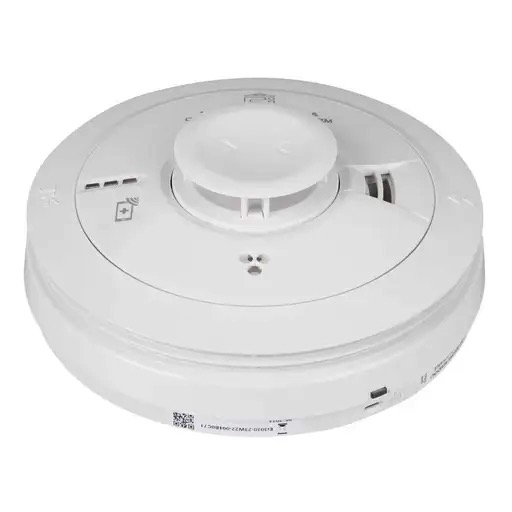
How much does a carbon monoxide alarm cost?
CO is colourless, odourless, and kills quickly. Anywhere fossil fuel is burned — gas boilers, wood-burners, coal fires, gas water heaters — needs a CO alarm.
- CO alarms: from £125 each + VAT, supply only
Positioning matters here. CO disperses evenly through a room rather than rising like smoke, so alarms usually go at breathing height on a wall or on the ceiling, depending on the manufacturer's instructions and the room layout.
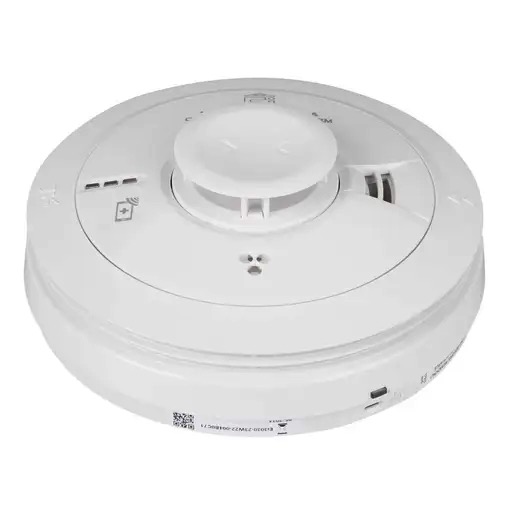
How much does a combined heat & CO alarm cost?
In a kitchen with a gas hob, or a compact boiler room, a combined unit covering both heat and CO can be the better call — one device instead of two.
- Combined heat & CO alarms: from £125 each + VAT, supply only
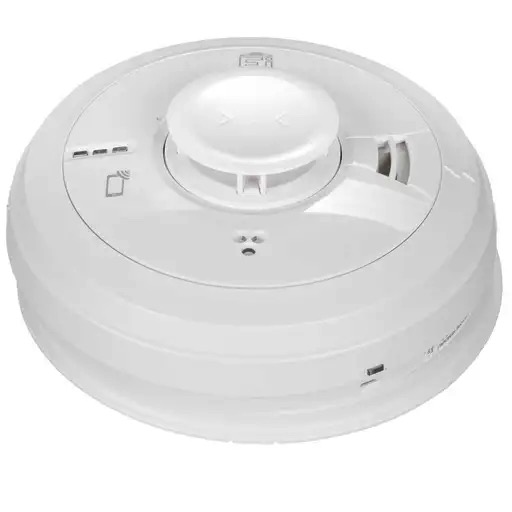
Why is there a separate disposal charge?
Old alarms are electrical waste under WEEE regulations, and some contain components that need careful handling. Every quote includes collecting your old units and disposing of them properly — it's not an add-on I've bolted on to pad the invoice, it's how they legally have to be dealt with.
Where should each alarm type go?
A properly protected home doesn't rely on one type of detector doing everything. Each one has a specific job:
Smoke alarms — hallways and landings, particularly between bedrooms and escape routes, main living areas, and anywhere with a solar PV inverter or battery storage system. Inverters and battery packs can, in rare fault conditions, overheat — a smoke alarm in that room gives you early warning before it becomes visible elsewhere. Fit on the ceiling, at least 300mm from walls and light fittings, and interlinked so one going off sets all of them off.
Heat alarms — kitchens and garages, ceiling mounted, positioned away from the cooker itself but within the same room.
CO alarms — any room or loft space with a gas boiler, living rooms with wood-burners or open fires, anywhere with a flued or fuel-burning appliance.
Combined heat & CO alarms — kitchens with gas appliances, boiler rooms, or anywhere space is tight and you want one device covering two risks.
Why do alarms only last 10 years?
Every modern alarm — smoke, heat or CO — is designed around a 10-year working life, and that applies to both the sensor and the built-in battery.
Smoke sensors pick up dust and airborne particles over time and get slower to react. Heat sensors go through thousands of thermal cycles and can drift out of calibration. CO sensors chemically age, which reduces their accuracy. That's why decent alarms have a "replace by" date printed on the case — once you're past it, the unit is no longer within its certified working life, whatever it looks like on the ceiling.
The built-in battery in mains alarms is usually a sealed lithium cell with the same 10-year design life as the sensor. You can't just swap the battery — when it's due, the whole unit gets replaced. If yours starts chirping intermittently or shows a fault light, that's it telling you it's done.
Can an old or missing alarm affect my insurance claim?
Yes, and this is the bit most homeowners don't know until it's too late.
If you have a fire and your alarms are clearly past their 10-year mark, or weren't working at the time, that gets noted in the fire investigator's report. Insurers can and do use that to argue you didn't take reasonable safety precautions — and reduce your payout, or in serious cases refuse it outright.
The same applies to old battery-only alarms with the battery removed or dead. If there's no working alarm where there reasonably should have been one, you're looking at the same risk. This is exactly why I push people toward mains-powered, interlinked systems with CO and heat cover where it's needed, kept within their 10-year life.
Can I fit a mains smoke alarm myself?
I wouldn't, and here's why. When you take one of these down, you'll typically find six or more wires behind it — permanent live, neutral, an interlink wire to other alarms, earth, and often a loop-through feed to another part of the circuit. The back box is frequently acting as a junction point for more than just that one alarm.
Get a conductor wrong — mix up the interlink wire with a live, leave an earth loose, assume the colours match modern standards when they don't — and you can disable other alarms in the house, introduce a shock risk, trip breakers, or in the worst case create a fire risk of your own making.
There's also a compatibility issue: not every brand talks to every other brand's interlink system. Swap in a different manufacturer without checking, and your alarms might stop triggering each other altogether. Any electrician doing this properly will identify your existing wiring method, supply compatible units, test that everything sounds together, and carry out the work to BS 7671 and current Building Regulations — including Part P where it applies.
What does a full smoke, heat and CO system look like in a typical home?
Put together properly, a well-protected home usually has:
Smoke alarms in hallways and landings on every floor, the main living area, and any room with solar PV or battery storage. Heat alarms in the kitchen and garage. CO alarms anywhere with a gas boiler or an open fire. Combined heat & CO units in kitchens with gas appliances or compact plant rooms.
Mains-powered, interlinked, and within their 10-year life, that combination gives you early warning of fire, early warning of dangerous CO, and a much stronger position if you ever need to make an insurance claim.
What does Bright Spark do when we survey your alarms?
We check the age and "replace by" date on every existing alarm, confirm they're in the right locations, and test interlinking and basic function. You get clear, itemised pricing before anything's fitted — no surprises on the invoice. Once installed, we test every alarm in front of you and talk you through monthly testing, what the warning chirps mean, and when to expect the next replacement.
Get your alarms sorted
If you're in or around Tonbridge, Tunbridge Wells, Sevenoaks or Crowborough and your alarms are approaching or past 10 years old, don't wait for an incident to find out they're not compliant. It's a modest job that makes a real difference when it counts.
Call 01892 531 728, WhatsApp 07775 561 363, or email karen@brightsparkelectrician.co.uk.