

Where Bright Ideas
Come to Life!
Come to Life!
A fuse is a protective device.
The fuse is designed to protect your equipment/appliance and also you in the case of an overload due to mechanical or electrical failure.
Be warned, if you are tempted to use something like a paperclip piece of tinfoil wrapped around an old fuse or a nail - DONT. It is extremely lethal and dangerous and could result in electrocution, a fire or total failure of your appliance.
In the UK the majority of domestic appliances can stay with a pre-fitted moulded plug, the plugs have either a three amp or a 13 amp rated fuse. It is very rare that your find anything in between although there are other fuses available. The plug with its fuse for the appliance make the minimum protection required for your piece of equipment/appliance. An incorrect fuse however will continually blow if it is incorrectly rated or fail to protect your equipment from literally a catastrophic meltdown if it is too high.
If you have a plug embossed on the fuse carrier on your plug, there will be the fuse rating for your appliance. I.e. 13 A or 3 A.
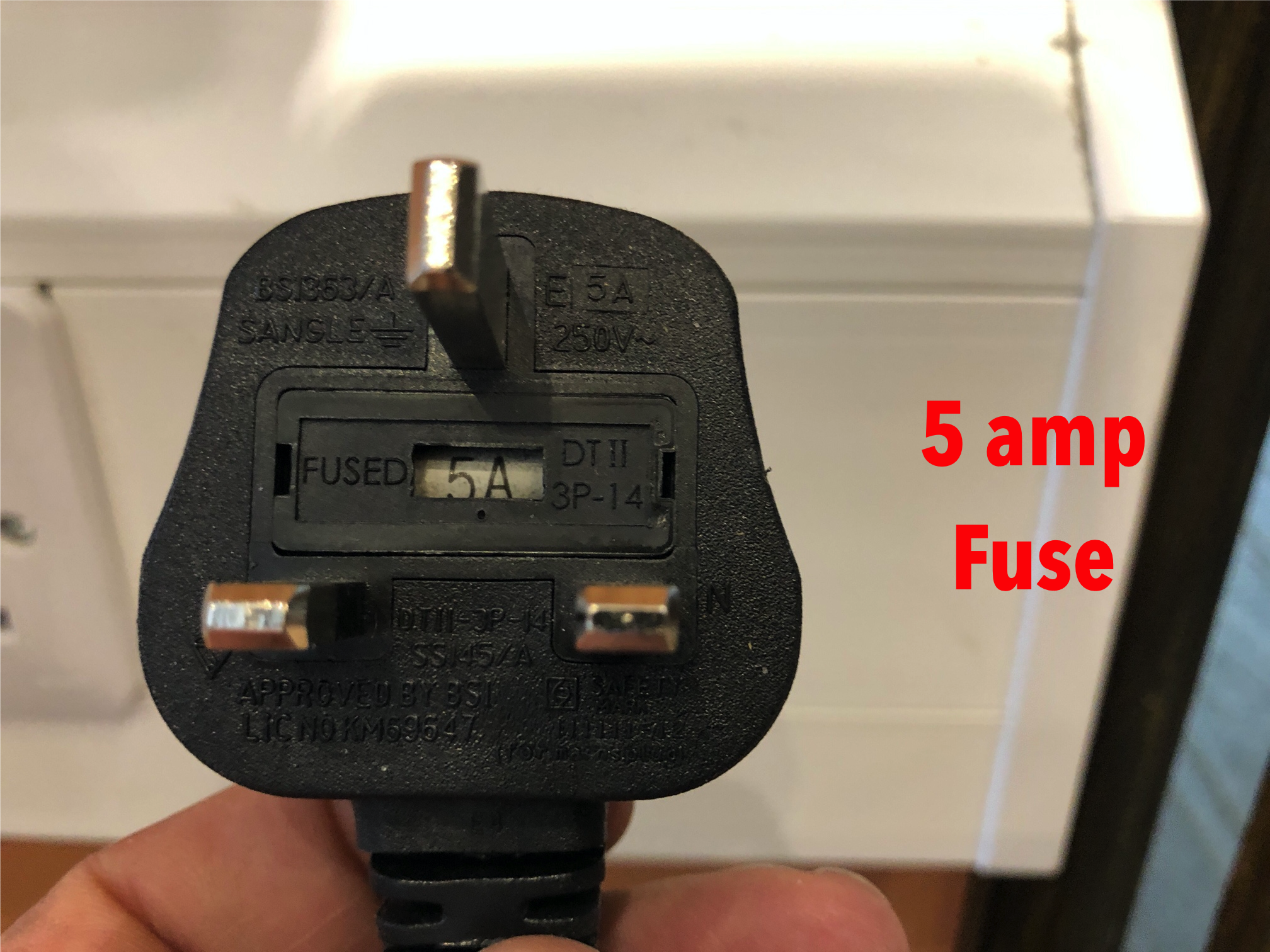
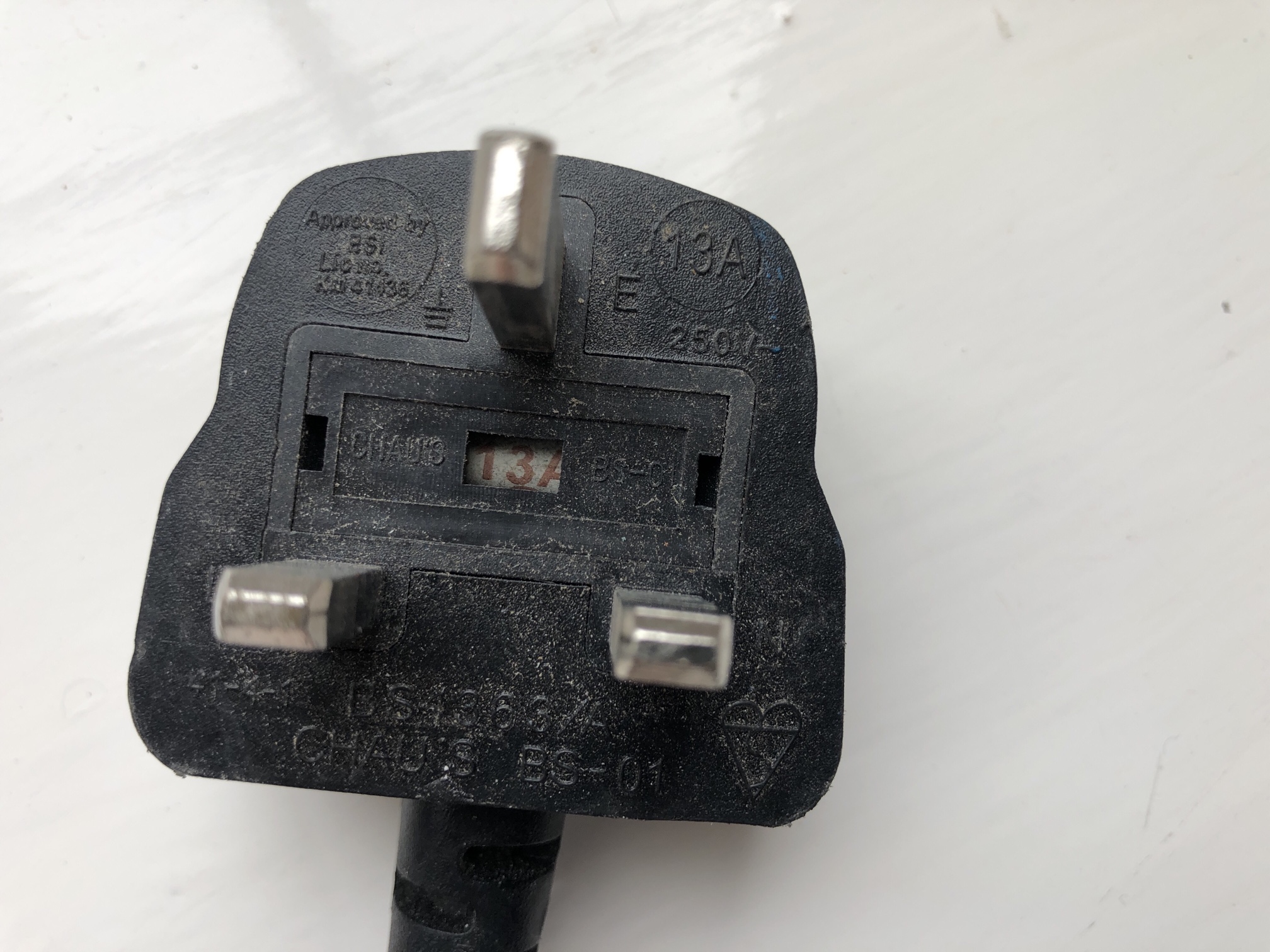
A mains plug takes a 25.4 mm (1.25 inch) BS 1362 fuse, these fuses are available from any local supermarket, DIY store. They are cheap. Don’t risk stealing a fuse from another appliance just to get your appliance going, unless you are using a fuse of the same rating.
I have a pre-fitted moulded plug on my appliance and there is no fuse? I have no idea what type or fuse rating I require!
Let’s do some calculations –
In the UK, the mains voltage is generally 240 Volts.
Looking at the appliance ID plate which can be found on the base of the appliance or on the back. It will advise the wattage required, the voltage, the hertz – Hz (frequency) and potentially the amperage as well.
The simple calculation is watts divided by volts equals amps. After you have calculated this it is a simple case of adding around 10% to the value and choosing the nearest fuse the match. This is more of the precise method then just guessing should you require a three, five, or even 13 amp fuse. Replacing with the correct fuse will avoid the risk of you blowing the fuse, at start-up current (amps) of your appliance.
If you have a training lead, such as a 4-gang socket or more extension lead this will only be rated to maximum of 13 amp. Overloading one of these becomes apparent when the total amperage of the appliances plugged in exceeds the 13 amp in this extension lead.
The majority of the time there is no identification plate on the table lamp, however we know that the maximum lightbulb wattage is going to be 100 W.
So the calculation would be 100 Watts divided by 240 Volts equals 0.42 amps +10% which equals 0.46 Amps.
100 / 240 = 0.42 amps + 10% = 0.46amps
So from this calculation the ideal fuse would be 1 amp. However as standard most manufacturers put a 3 amp fuse in the plug.
As modern day living has progressed and technology improves. Lightbulbs are changing over to LED. A lot of the LED lightbulbs are literally 5 W (that’s one 20th of a hundred watt lightbulb) so a calculation for this would equal 5 W divided by 240 V equals 0.02 amp which equals 0.022 amp.
5 / 240 = 0.02 amps + 10% = 0.0.022 amps
So from this calculation the ideal fuse would be the one amp fuse, but as standard most manufacturers will have put in a three amp fuse into the plug.
Kettles have a wide range of wattages depending on if it is a slow boiling kettle, or a fast boiling kettle.
A typical identification plate which can be found on the base of the kettle could show the following information 220–240 Volts – 50 Hz 1850 to 2200 Watts the ID plate shows that this is a kettle that is suitable for Europe 220 V (1850 Watts) and the UK 240 Volts (2200 Watts). The 50 Hz is a frequency and is not required for the calculation.
The calculation would be 2200 Watts divided by 240 Volts equalling 9.17 A +10% which equals 10.087 amp. So from this calculation yeah ideal fuse would be a fuse of around 10 A amp.
2200 / 240 = 9.17 amps + 10% = 10.087 amps
However a 13 amp fuse would be fitted as standard into the plug by the manufacturer, any fuse lower than even the 10 amp would fail.

If the appliance shows 60 Hz, then this appliance is not suitable for use within the UK – I’m sorry but you may have bought this appliance cheap off of the Internet. If the appliance shows 50–60 Hz it is suitable for the dual use (Europe/UK).
This principle of calculation also applies to Toasters, Irons, Sandwich Toasters, and other kitchen appliances, to ascertain the correct Fuse.
If the fuse still blows in your plug, then the problem is an appliance issue.
You have a choice to either replace the appliance with a new one, return the appliance under warranty.
The fuse is designed to protect your equipment/appliance and also you in the case of an overload due to mechanical or electrical failure.
Where are you have had a new kitchen you may find that you have a fuse spur above the worktop beside or close to a socket outlet, the fuse spur then feeds down and isolates the appliance below so you do not have to pull out the appliance should there be a failure of the appliance which could in fact mean you could get electrocuted by just pulling out the appliance. As all appliances are supplied with a moulded plug, the warranty can be infringed, if you cut off the plug!
Generally in this instance you will be having a 13 amp fuse in the fuse spur, feeding down to a 13 amp fuse in your plug,.
If you find that you have a three amp fuse in the fuse spur feeding down to your appliance, and using the calculations above, you have a requirement for 13 amp fuse, then the fuse in the fuse spur needs to be upgraded to the 13 amp fuse.
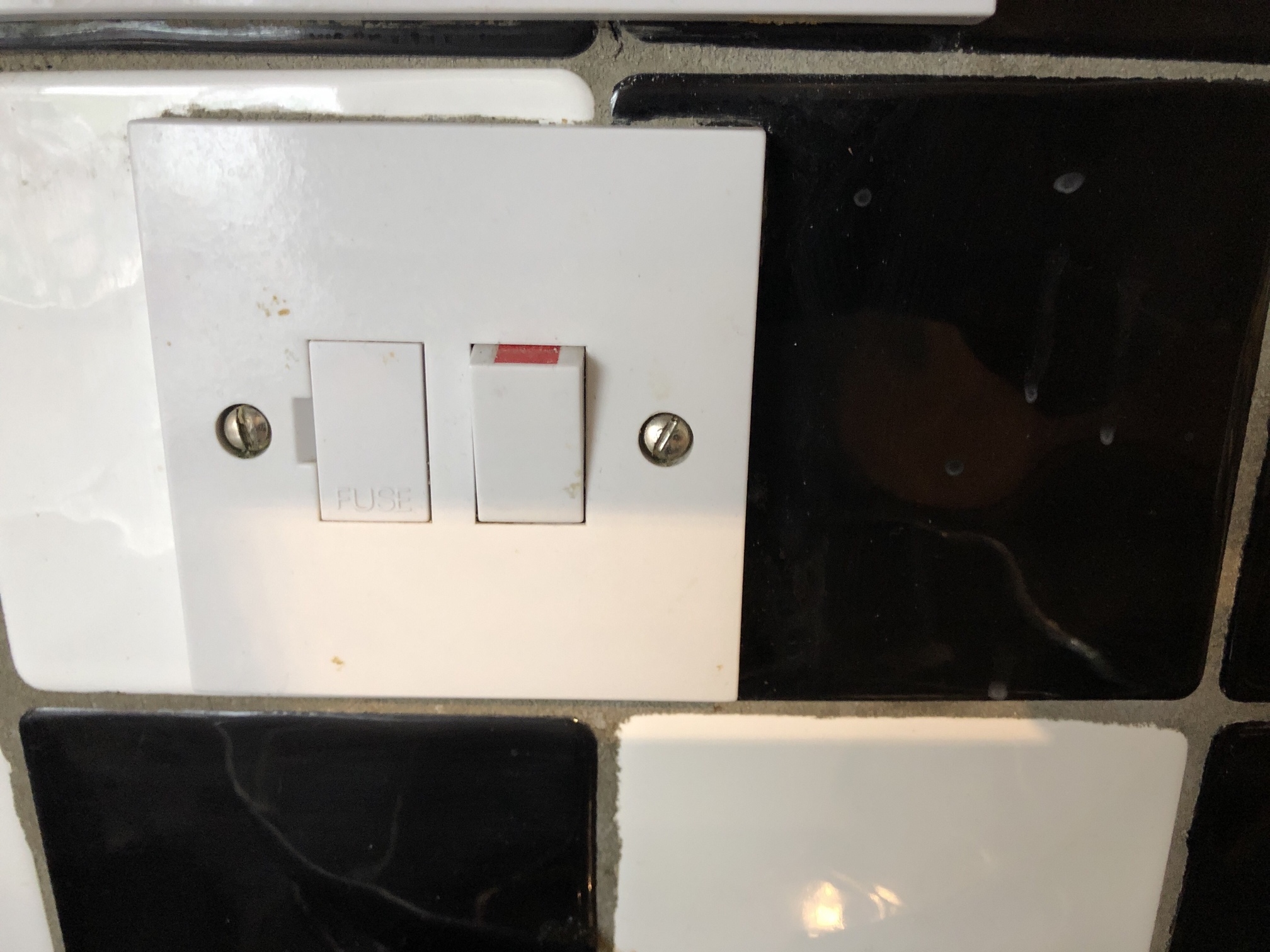
In other instances, where an electrician may have found that there is no lighting circuit cables to the area where customers require lights, a fuse spur may have been introduced to feed the new lighting circuit. This fuse spur might have a three amp or a five amp fuse in it depending on the amount of lights within the circuit. You will typically find this when there has been an extension such as a conservatory, or you have had installed garden lighting.
For more information, or immediate Help Give us a Call on 01892 531728 which is active 24/7.
Alternatively fill out our web enquiry form, and we will respond quickly.
Your electrician Philip was punctual, friendly and very efficient. Would certainly use you again and recommend your company.
Karen and her team of "Bright Sparks" are wonderful to deal with and needless to say know their negatives from their positives with just a dash of earth . I would recommend their services to anybody.
I would highly recommend Karen and her team for any electrical jobs you have. From the moment I first emailed my enquiry the service was super quick (I appreciate this depends on their other jobs at the time). We received a quote that was clear with the works to be done and price was reasonable. On the day the electrician (Joe I believe) turned up on time, did a fab job and even tidied up after himself. The old ceiling lights we had were a little tricky to get off and pulled some of the plaster off too, but he filled it in and made it as good as new.Great job from beginning to end. Thank you Bright Spark
Thanks for Louise's great work - very happy!
We have been very impressed by Bright Spark Electrical Services. Karen Smith visited us to discuss our requirements and gave advice which cut our costs. The work was carried quickly and on time with excellent results. The areas affected were clean and tidy when the work was completed. We had a slight problem with a unit but it was dealt with as soon as it was reported. I have no hesitation in recommending this company and will definitely contact them again for any further electrical problems.


