

Where Bright Ideas
Come to Life!
Come to Life!
If you've noticed your white sockets and light switches have gone a dull cream or yellow while the wall around them is still white, you're not imagining it. It's one of the most common questions I get asked on site — and it's the subject of a video I've put together too. Most of the time it's harmless. Occasionally it isn't. Here's how to tell the difference.

Most sockets, switches and other white accessories are moulded from plastic that's whitened using a pigment called titanium dioxide (TiO₂). It's what gives them that bright, opaque white finish when they're new. The problem is that pigment reacts with UV light over time — sunlight (and to a lesser extent some artificial lighting) slowly breaks down the surface of the plastic, and the chemical change makes it absorb more yellow light instead of reflecting white light back at you. That's the yellowing you're seeing.
It's the same process that yellows old white plastic garden furniture, appliance casings and window frames. Sockets and switches are just more noticeable because they sit at eye level next to a wall that hasn't changed colour.
Titanium dioxide has been the standard white pigment in plastics, paint and coatings since it was first mass-produced in the early 20th century, and it's still the go-to choice today. It comes in two main crystal forms — rutile and anatase — both refined from mineral ore. Rutile is the one used in sockets, switches and other outdoor-rated or UV-exposed plastics, because it's more UV-stable than anatase and has one of the highest refractive indices of any white pigment. In plain terms, that refractive index is what scatters light so effectively that a relatively thin layer of plastic reads as a solid, bright white rather than translucent grey.
It's also chemically inert, which is exactly why it's used in an electrical accessory in the first place — it doesn't react with the polymer around it or degrade the plastic's insulating properties, and it holds its colour under normal indoor conditions for years.
The yellowing itself is a process called photo-oxidative degradation. UV energy is absorbed at the surface of the plastic and triggers a reaction between the polymer and oxygen in the air, breaking some of the polymer chains apart. That creates new molecular structures at the surface that absorb light differently to the original plastic — specifically, they absorb more of the blue end of the spectrum, which shifts the reflected light toward yellow. It's a surface effect, which is exactly why a light sand or a fresh coat wouldn't touch it without breaking the surface down further, and why cleaning products can't reverse it either — there's nothing sitting on top to clean off.

A few things speed the process up or add to it:
A wipe with a soft cloth and mild detergent will lift dust, grease and nicotine film, and it's worth doing first — sometimes that's most of the discolouration. But if the plastic itself has yellowed from UV exposure, that change has happened inside the material, not on top of it, and no amount of cleaning brings it back. At that point the only real fix is a new faceplate or accessory.
Given how inexpensive a like-for-like socket or switch swap is, and how much a fresh white accessory lifts a room, I'll usually just recommend replacing rather than fighting a losing battle with a cloth — especially if you're doing one room and want them all matching again.
This is the part worth paying attention to. Even, all-over yellowing that matches across several sockets in a room is normal ageing and nothing to worry about. But watch for:
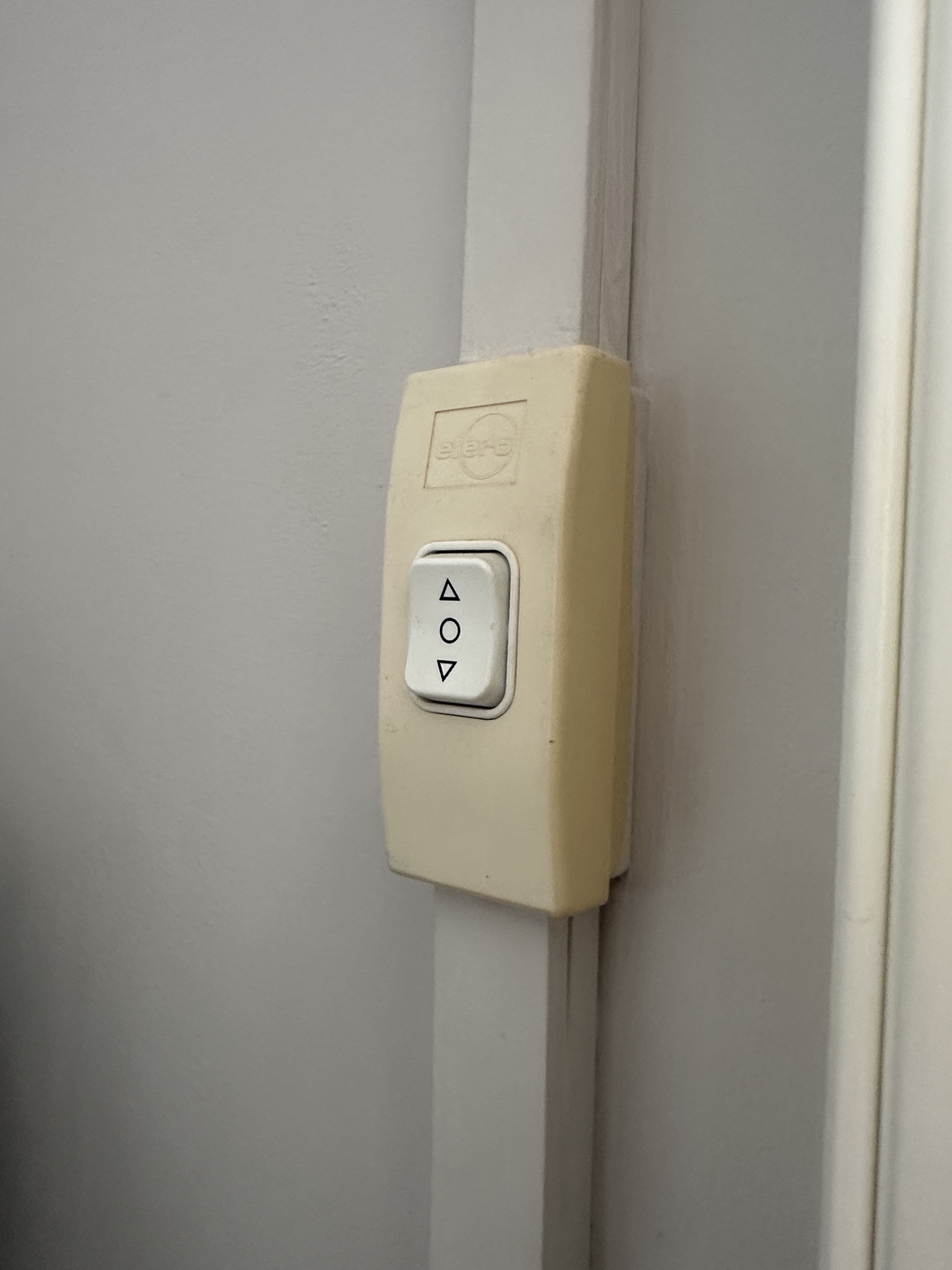
Uneven, localised discolouration like that is often a sign of heat from a loose connection, a worn socket, or a circuit that's being overloaded — not sunlight. That's a job for an electrician, not a cloth. If you're at all unsure which kind you're looking at, it's worth getting it checked rather than guessing — it's a five-minute job for us to confirm, and the alternative is a fire risk left unaddressed.
For straightforward cosmetic yellowing, swapping out old accessories for new ones is a quick, low-cost job — we can often do a whole room's worth in one visit, or fold it into other work you've already got booked in. If you're seeing the uneven kind of discolouration described above, get in touch and we'll take a look before it becomes a bigger problem.
Why do white sockets and switches turn yellow?
UV light breaks down the titanium dioxide pigment in the plastic over time, changing how it reflects light. Heat, nicotine and grease can add to it.
Can yellowed sockets and switches be cleaned back to white?
Surface grime, yes. True UV yellowing has changed the plastic itself and won't clean off — replacement is the only fix.
Is a yellow socket dangerous?
Even, all-over yellowing isn't. Yellowing on just one accessory, or concentrated around the pins or edges, can signal heat damage from a loose connection or overload, and should be checked.
How much does it cost to replace a yellowed socket or switch?
It's one of the more affordable jobs we do — request a quote for an exact price.
Notice something off with a socket or switch? Get a free quote to have it checked or replaced."

Bright Spark Electrical Services — NICEIC Registered Electricians
Tonbridge | Tunbridge Wells | Sevenoaks | Crowborough | Kent
01892 531 728 | karen@brightsparkelectrician.co.uk | www.brightsparkelectrician.co.uk
Part P Registered | NICEIC Approved Contractor | Electrical Safety Register
Karen and her team of electricians did a very good job in assessing our electrical circuits, modernising and upgrading our fuse boxes and ensuring compliance with the latest regulations. They were efficient and polite and, when they had finished the work, left the house tidy and in good condition
‘Excellent service, quick and very efficient. Tidy work. No problem recommending Karen and her team. Will definitely use these guys again!’
We recently appointed Bright Spark Electrical Services for upgrading our home electrics. Initially their quotation submitted was very professional, every detail of work to be carried out was itemised. The work was completed very efficiently and very speedily. In fact a good tidy electrical job. I believe in giving credit where it is due I would recommend Bright Spark Electrical Services not only for the work completed in my home, but also for their impressive record, which can be easily checked.
Karen runs a great company. She is that very rare breed of taking care, respecting and rewarding her employees. In turn, Terry who carried out our work showed due care and attention and completed works with such professionalism. He interacted with my inquisitive little boy who may, one day may, become an electrician - he certainly had a great role.model to follow!
You just saved us the biggest headache ever; after months of electrical problems ( now resolved), we had a ‘no power situation’. After checking circuit boards, switches etc we were at a complete loss. Read your piece above (after Googling ‘circuit board switches up, but no power‘) about RCD switch and resetting (didn’t know what an RCD was), and after 8 hours sleep dreaming of circuit boards and 2 minutes of contemplation, and re-reading your advice,I totally nailed it. Brilliant tutorial, many thanks. Susanne (I am neither young nor savvy with anything technical)


