

Where Bright Ideas
Come to Life!
Come to Life!
If you've had a break-in nearby, a dark side return that makes you nervous getting to the bins, or you're just fed up leaving a porch light on all night for no reason, a motion-activated LED flood light solves all three. I fit these regularly across Tonbridge, Tunbridge Wells, Sevenoaks and Crowborough, and the questions I get asked are always the same ones — so here they are, answered properly.
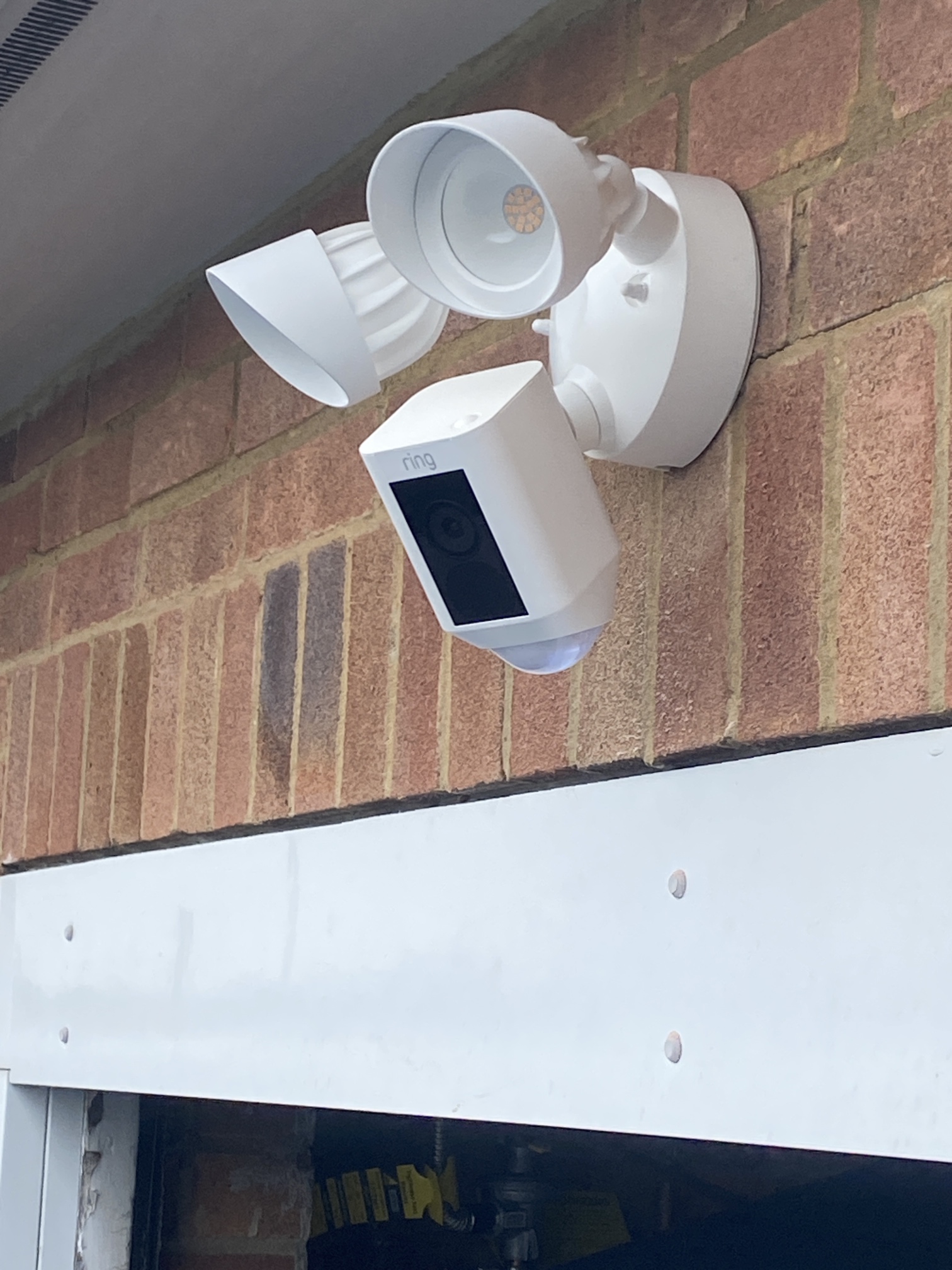
A motion sensor flood light pairs an LED floodlight with a PIR (passive infrared) sensor. The PIR detects the heat given off by a moving body — a person, a car, sometimes next door's cat — and switches the light on automatically. Most units let you adjust three things: sensitivity, how long the light stays on once triggered, and the detection range. Get those three settings right and the light works with you instead of going off every time a fox walks past.
Two reasons, and cost is the smaller one. LEDs use a fraction of the electricity of the old 500W halogen floods, so running costs drop straight away. But the bigger reason is availability — halogen security lights are being phased out under UK energy regulations, so if yours has failed, you're not really choosing LED, you're being pushed into it. Worth knowing before you ask me to "just replace it like-for-like."
Legally, if you're replacing an existing outdoor light fitting on the same circuit, you can do it yourself. In practice, most people don't, because outdoor electrics carry real risk if done wrong — damp ingress, incorrect cable rating, no RCD protection. If you're adding a new circuit rather than swapping a fitting, that's different again (see below). Either way, I'd always get it checked if you're not confident, especially anything involving a new cable run outside.
It depends what you're doing, not what you're fitting. Swapping one outdoor light fitting for another on the existing circuit isn't notifiable. Installing a brand new circuit to feed the light — a new cable run from the consumer unit — is notifiable work under Part P, because it's a new circuit in an outdoor location. I handle the notification as part of the job, so you don't need to think about it, but it's worth knowing the distinction before you get a quote, because it affects the price.
Legally, if you're replacing an existing outdoor light fitting on the same circuit, you can do it yourself. In practice, most people don't, because outdoor electrics carry real risk if done wrong — damp ingress, incorrect cable rating, no RCD protection. If you're adding a new circuit rather than swapping a fitting, that's different again (see below). Either way, I'd always get it checked if you're not confident, especially anything involving a new cable run outside.

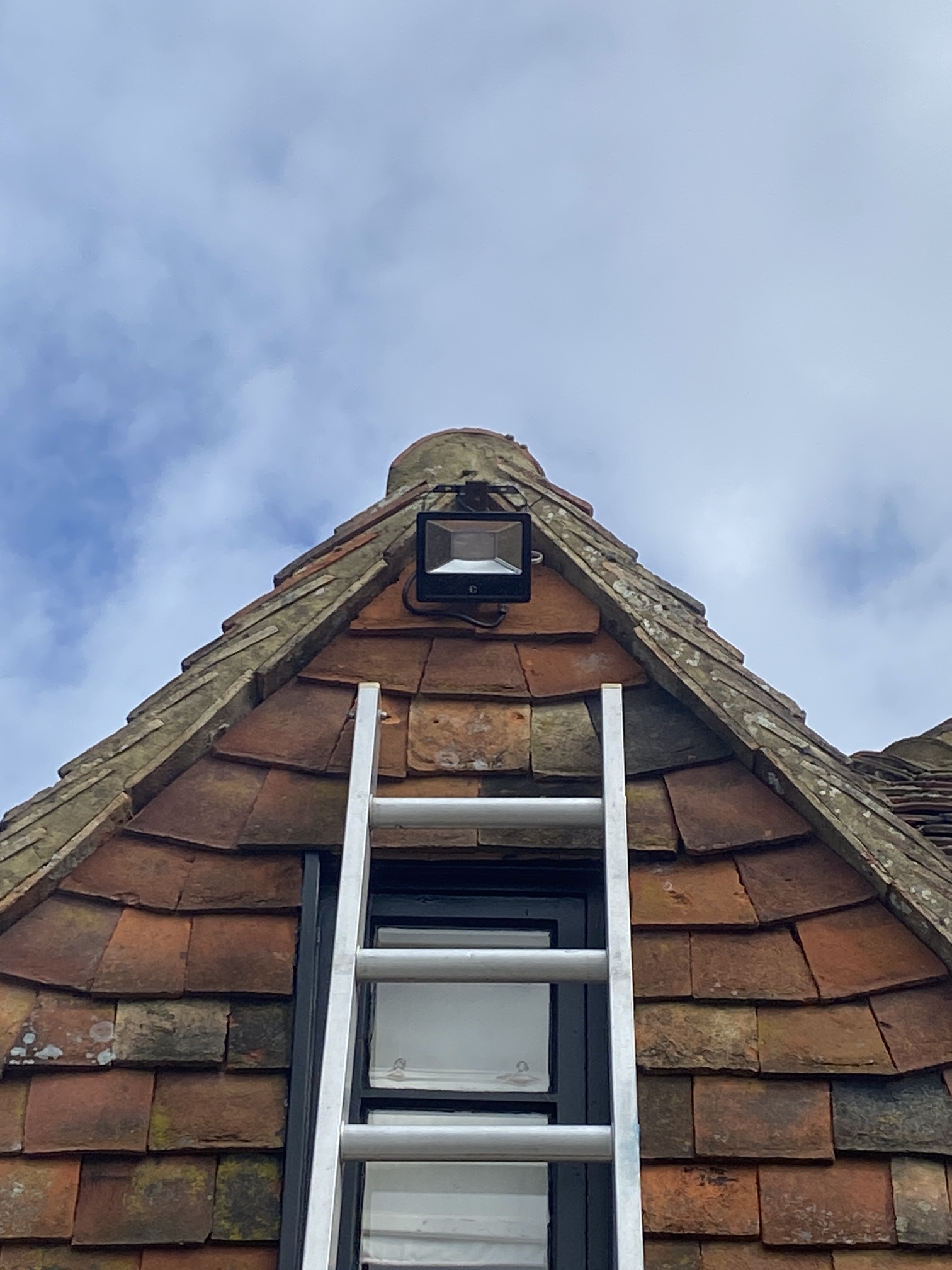
Height matters more than most people expect. Mount too low and the sensor gets triggered by anything that moves at ground level — cats, blown leaves, your own bins. Mount too high and you lose sensitivity to people walking normally. I generally recommend a minimum of 2.5 metres, angled slightly downward, covering the approach to doors, gates and any blind side returns rather than the whole garden. One well-placed light beats two badly placed ones.
This is the single most common call-out I get for these lights, and it's almost always one of three things: the sensitivity is set too high, the detection angle is catching a road or footpath you don't need covered, or the unit's been knocked out of position. Most PIR units have a sensitivity dial and a separate lux (daylight) setting — if yours is coming on in broad daylight, that's the lux setting, not the motion sensor, and it's a five-minute fix. If you're getting constant false triggers and you've already tried adjusting it, the sensor itself may be on its way out — read my troubleshooting guide for outdoor PIR sensors for the full fault-finding checklist.
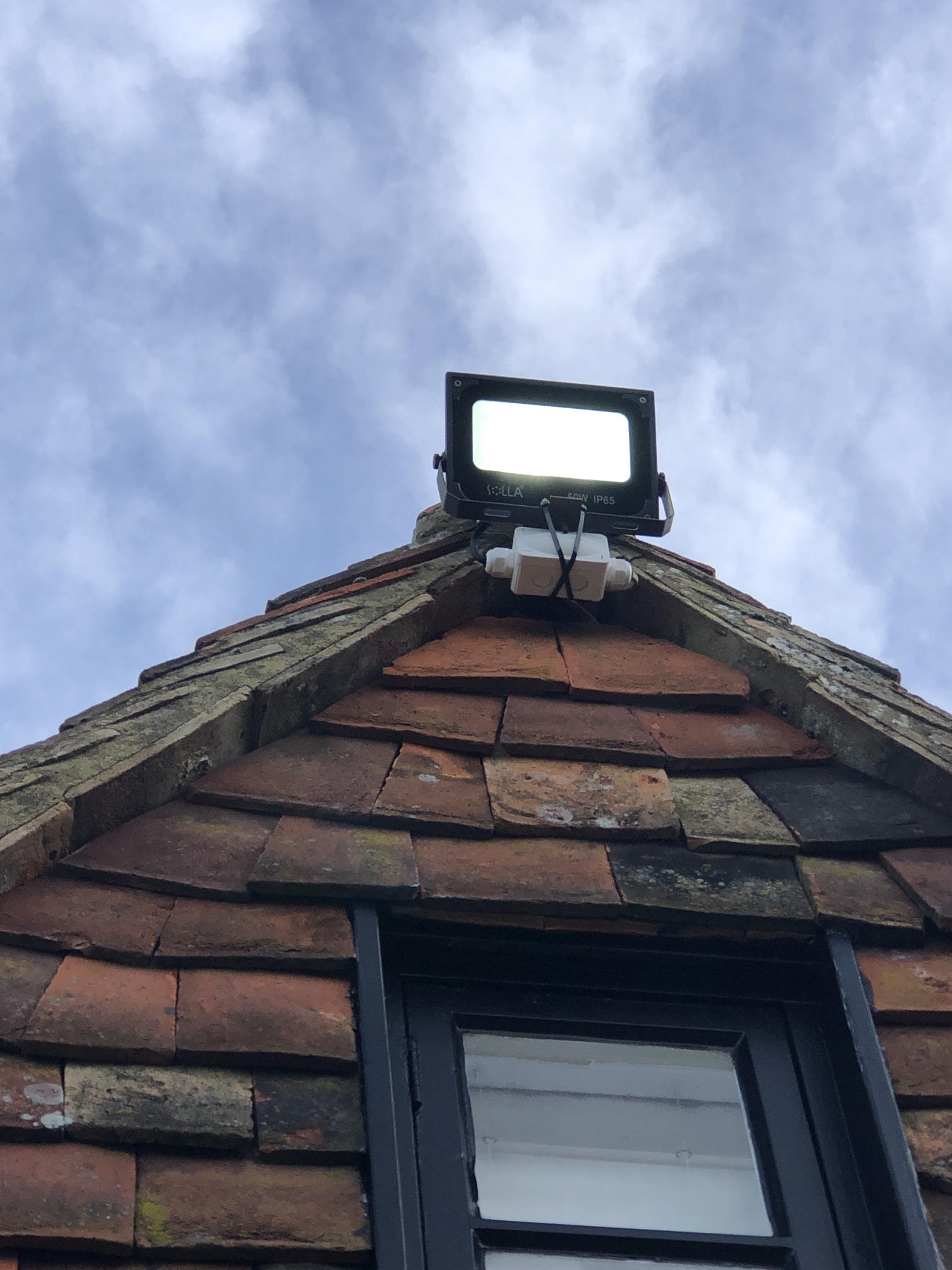
Anything mounted outside and exposed to the weather needs a minimum IP44 rating, and I'd generally push for IP65 on anything facing driving rain — most decent flood lights meet this as standard, but it's worth checking before you buy one online rather than through a trade supplier. Outdoor lighting circuits also need RCD protection under BS 7671, regardless of the fitting's IP rating.
A straight swap of an existing fitting on an existing circuit is the cheapest option. Adding a new circuit — new cable, new protective device at the consumer unit, and the Part P notification — costs more, but it's the right call if you're lighting an area that's never had power before, like a side return or a detached garage. I'll always tell you honestly which one your job actually needs rather than upselling you into a new circuit you don't need.
Yes — sudden bright light is one of the most effective low-cost deterrents, because it removes the cover of darkness an intruder relies on and signals the property is being monitored.
Often yes, if it's a straightforward like-for-like swap on the same circuit. If you want to add a separate sensor to feed an existing light, that's usually possible too — I'd need to see the existing setup to confirm.
No — standard mains-wired flood lights need power to operate. If backup lighting matters to you (care homes and commercial premises often need this), a battery-backed or emergency-rated fitting is a separate conversation.
Typically 30,000–50,000 hours for the LED itself, with the sensor rated similarly. In practice, sensors are more likely to fail from water ingress or a knock than from age.

Thinking about security lighting for your home or business? Whether it's a straightforward light swap or a new circuit into a side return, garage or shed, I'll tell you straight which category your job falls into and what it'll cost before you commit to anything.
Call me on 01892 531 728, WhatsApp 07775 561 363, or request a quote online — I cover Tonbridge, Tunbridge Wells, Sevenoaks and Crowborough.
or Email me: karen@brightsparkelectrian.co.uk
I needed a job done really 'sooner rather than later' and at a weekend too! Karen came out, assessed what needed to be done and set to work straight away. Job done, cleared up and on her way within the hour! Not often you get that service! Certainly will keep her number on my mobile and recommend to anyone who needs an electrical job done!
Karen and her team of electricians are super responsive, very professional, and I love how they book an exact time and appointment with a follow-up confirmation text and email. I feel very confident in the quality of workmanship and know they will go out of their way to fix any electrical issues in my home!
We found the service to be friendly and pro-active. We had an appointment quickly and the engineer was able to find the issue, which was not straightforward, within an hour and rewire the effected ceiling lamp and resolve the issue completely within 2 hours. Very methodical and accurate working - most appreciated!
After moving house I had a lot of electrical work needed doing. Bright Sparks made a very good job of it all and has left me confident in the electrics in the house. The work consisted of a new fuse box, new lights, switches and plugs etc. The work was carried out in a clean, pleasant manner. I would definitely recommend this company. Margaret C
Thank you very much, and please pass on my thanks to Philip who completed the job. I appreciate it was an awkward space for him to work on, but everything was done so well and so quickly - I am very happy with the outcome! Will be returning to you for more jobs soon I’m sure!


